AVOIDED EMISSIONS
Our climate impact
TOMRA Collection’s avoided emissions represent the greenhouse gas emissions prevented when used drink containers are collected through TOMRA’s technology and services.
How we calculate our avoided emissions
TOMRA Collection’s avoided emissions are calculated using a methodology developed together with independent sustainability experts, Eunomia, and aligned with recognised international guidance on avoided emissions from the World Business Council for Sustainable Development (WBCSD).¹
Avoided emissions describe the greenhouse gas emissions that are prevented because TOMRA’s solutions are in use. We calculate them by comparing two situations: one where TOMRA Collection’s reverse vending and, in some markets, material handling solutions are in place, and one where they are not. The difference between these two situations shows the emissions that are avoided thanks to TOMRA’s technology and services.¹
The calculation is based on real, annual data on the number of empty drink containers returned through TOMRA reverse vending machines. We use a year‑by‑year approach rather than long‑term projections, which helps keep the results conservative and transparent.¹
The comparison depends on TOMRA Collection’s role in each market. In markets where TOMRA provides reverse vending machines, we compare today’s deposit return system with a system that works without the added convenience, automation and compaction those machines provide. In markets where TOMRA also runs material handling operations, we compare today’s system with a situation where those services are not available and the deposit return system would not work effectively.²
Reverse vending machines make returning bottles and cans easier, faster and more convenient for people. This improved recycling experience leads to higher return rates compared with systems that rely on manual or less accessible collection methods.³
The avoided emissions come from three main effects. First, higher return rates mean more bottles and cans are recycled. This reduces emissions by avoiding the need to make the same materials from scratch and by keeping material out of incineration and landfill.² Second, containers collected through deposit return systems are cleaner and easier to sort, which means less energy is needed during sorting.² Third, reverse vending machines compact containers at the point of return, so fewer transport trips are needed to move the same amount of material.²
Data on return rates and deposit return system performance is based on country‑level information published by Reloop and other public sources.⁴ Assumptions about differences between systems with and without reverse vending machines are informed by evidence showing that deposit systems with convenient return options consistently achieve higher return rates.³
Emissions factors for recycled materials are based on established industry data and peer‑reviewed studies and are consolidated within Eunomia’s life‑cycle assessment models.⁵ ⁶ ⁷ ⁸ ⁹ ¹⁰ ¹¹
The same assumptions are applied consistently to both the current situation and the comparison case.¹ The results are sensitive to return rates and system design, so conservative assumptions are used and key limitations are documented. Avoided emissions reflect the wider climate impact of TOMRA’s solutions and do not reduce the company’s reported greenhouse gas emissions. Avoided emissions are reported separately from TOMRA’s own emissions and are not used to claim carbon neutrality or net zero. ¹
References
1. World Business Council for Sustainable Development (WBCSD). Guidance on Avoided Emissions (2023). Retrieved from wbcsb.org.
2. Eunomia & TOMRA Collection. Avoided Emissions Methodology (2024).
3. TOMRA. Deposit Return Systems White Paper: Rewarding Recycling – Unlocking Circularity. Retrieved from tomra.com.
4. Reloop Platform. Global Deposit Book and associated country‑level deposit return system datasets. Retrieved from reloopplatform.org.
5. PlasticsEurope. Lifecycle data and emissions factors for plastics production and recycling. Retrieved from plasticseurope.org.
6. Franklin Associates. Life‑cycle inventory data for plastic packaging materials. Retrieved from fal.com.
7. Chen, Yuedong, Zhaojie Cui, Xiaowei Cui, Wei Liu, Xinlei Wang, XinXin Li, and Shouxiu Li. "Life cycle assessment of end-of-life treatments of waste plastics in China." Resources, Conservation and Recycling 146 (2019): 348-357.
8. Mendes Campolina, Juliana, Carolina São Leandro Sigrist, Jane Maria Faulstich de Paiva, Andréa Oliveira Nunes, and Virgínia Aparecida da Silva Moris. "A study on the environmental aspects of WEEE plastic recycling in a Brazilian company." The International Journal of Life Cycle Assessment 22, no. 12 (2017): 1957-1968.
9. International Aluminium Association. Data on aluminium production and recycling emissions. Retrieved from international-aluminium.org.
10. British Glass. Industry data on glass production and recycling emissions. Retrieved from britglass.org.uk.
11. Glass Packaging Institute. Data on glass manufacturing and recycling emissions. Retrieved from gpi.org.
12. Zier, Michael, Peter Stenzel, Leander Kotzur, and Detlef Stolten. "A review of decarbonization options for the glass industry." Energy Conversion and Management: X 10 (2021): 100083.

Approved Science-Based Targets
TOMRA is the only reverse vending provider with targets approved by the world's leading authority.
Life cycle assessments
We conduct life cycle assessments (LCAs) of TOMRA products throughout their development.
Incentivizing change
We’ve connected the success of our sustainability transformation to our leaders’ bonuses.
We're in this together
We’re all connected, TOMRA with our suppliers, and you with yours. When we succeed, you do too.
Reverse vending machines and sustainability
The business landscape is changing, but we don’t see this as a bad thing. We see it as an opportunity. Our strategy is simple: Do more of what we do best, while reducing the negative impacts our operations have on the environment. After more than half a century spent working in resource productivity, striving towards a world without waste, we see that the changes required of us already align with our values. We welcome them!
Increasing our handprint
More of what we do best
Our "handprint" refers to the positive impact enabled by our products. That's all the used drink containers that TOMRA technology captures for recycling and reuse, each and every year.
reducing our footprint
Less environmental impact
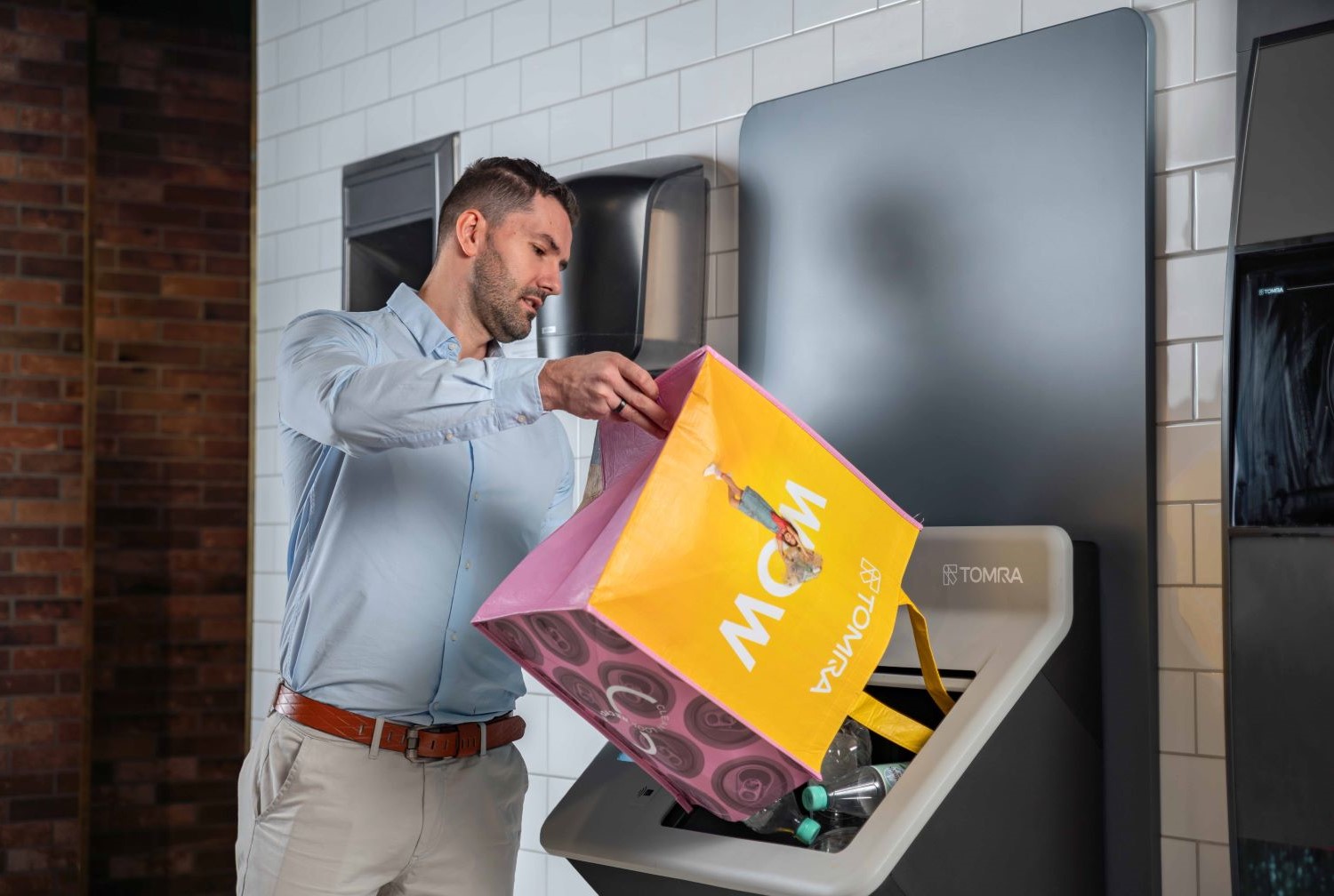
Our "footprint" refers to the negative impacts of our business operations. TOMRA is a producer of equipment and machines, and we need to take responsibility for our products, not only during their production, but also during their use and at their end-of-life.
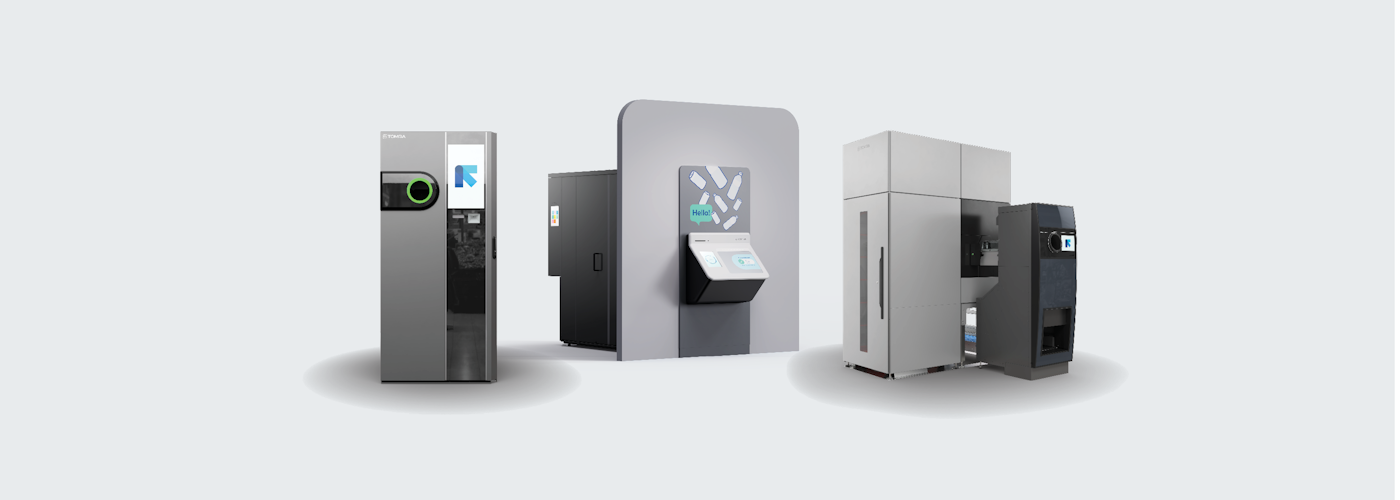
Best-in-class reverse vending solutions
lifetime impact
Product sustainability starts with design
By conducting life cycle assessments (LCAs) of core products to benchmark environmental emissions and analyze hotspots, we are able to make decisions that target factors like material use and type, power consumption, and transportation. This means we can deliver premium, best-in-class reverse vending solutions with a lower environmental impact across their full lifetime.
TOMRA's product life cycle assessment (LCA) methodology
Our life cycle assessment (LCA) approach considers the entire life cycle of our products, including the production-, use- and end-of-life phases. The EF 3.0 method¹ is used to calculate the environmental impact while SimaPro and Ecochain Mobius are used to perform the calculations and analyze the results.
The production phases are modelled by grouping individual components from the BOM in specific
material categories, which are then connected to their respective production impacts using
ecoinvent².
For the assembly phase, data on energy consumption and waste generation of similar products is gathered for use in analysis.
The use phase is covered through data on energy consumption (both idle and active mode),
information on maintenance visits, and expected repair needs. TOMRA Collection typically uses
Germany as a proxy market in LCA calculations, as the market plays a major role in TOMRA's business
and offers more conversative estimates of energy-related emissions than European averages, while
providing a specific geography for calculating transport distances.
The end-of-life impacts are modelled using the average recycling rates given in a relevant contemporary source, for example JRC (2020)³ has been used previously.
The cut-off approach was used to divide the environmental loads from recycling between product life cycles.
If the life of the material is ending (for example in landfill or incineration), then the impact is allocated
to the product and included in the results. Whereas, if the life of the material involves being sent for
recycling, then the impact is not allocated to the product, and is excluded from the results.
References
1. Fazio, S., Castellani, V. Sala, S. Schau, EM. Secchi, M. Zampori, L., Diaconu E. 2018. Supporting information to the characterisation factors of recommended EF Life Cycle Impact Assessment method.
2. JRC 2020. Product Environmental Footprint Category Rule for IT Equipment.
3. Wernet, G., Bauer, C., Steubing, B., Reinhard, J., Moreno-Ruiz, E. & Weidema, B. 2016. The ecoinvent database version 3 (part I): Overview and methodology. Int J LCA, 21, 1218-1230.
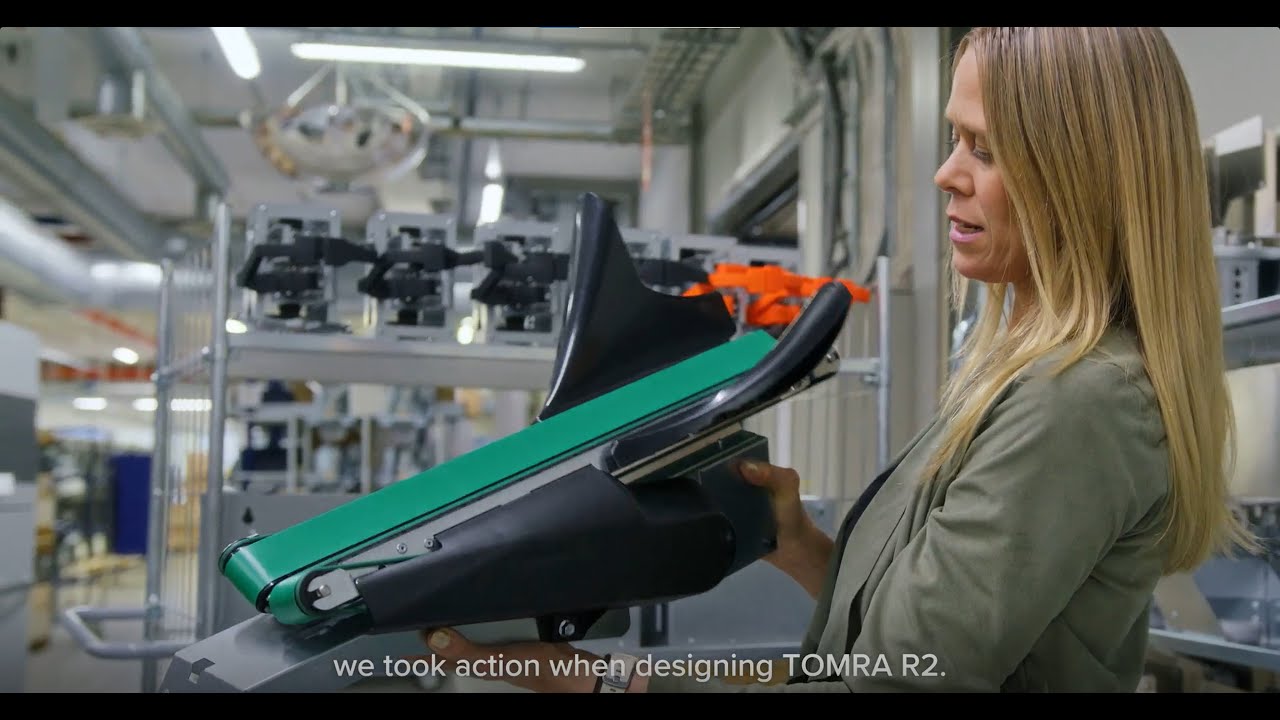
Don't just take our word for it: Get the TOMRA R2 sustainability report today
Our strategy is simple: Do more of what we do best, while reducing the negative impacts our operations have on the environment.
Madeleine Brun LandmarkHead of Sustainability
lifetime impact
Service offerings contribute to sustainability
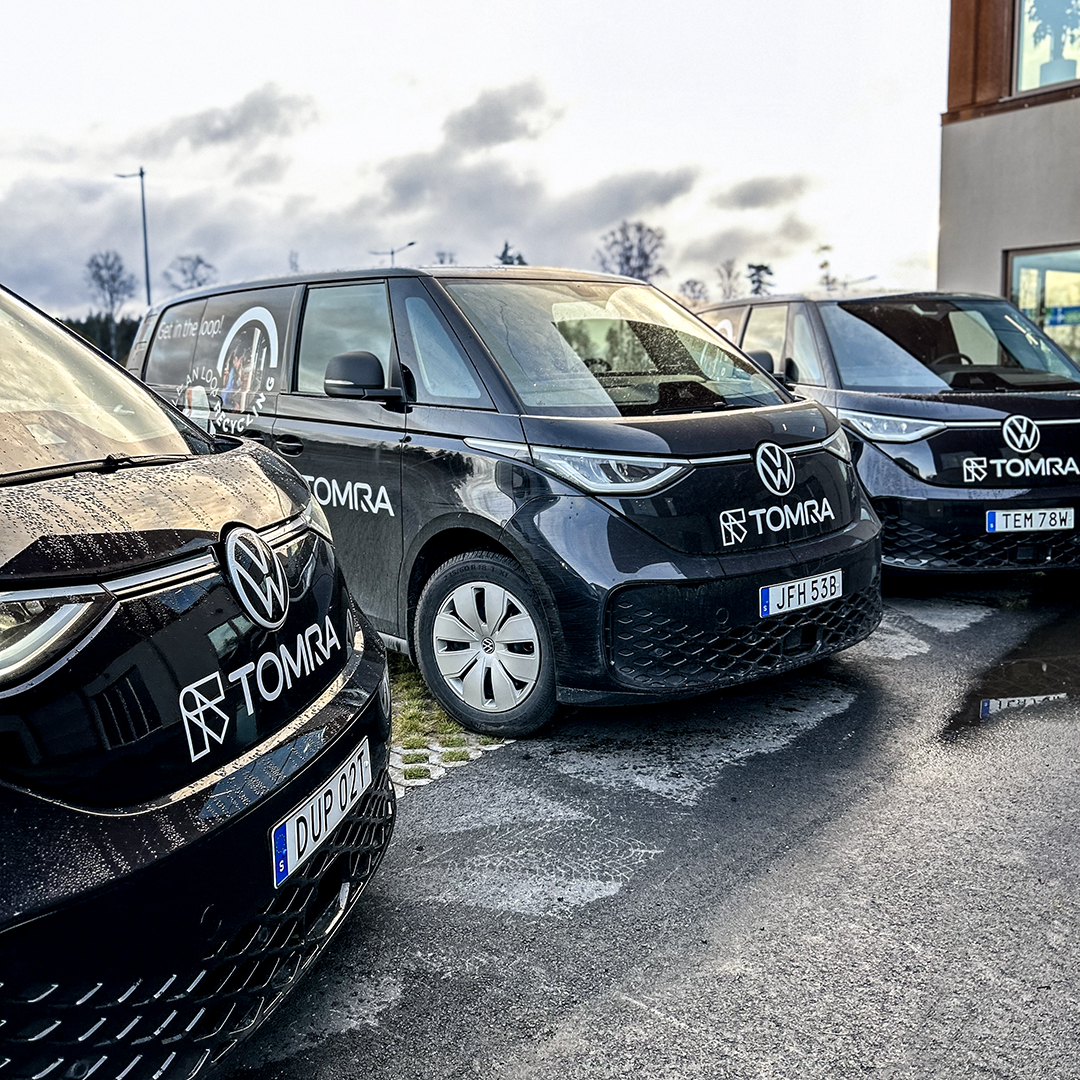
By offering remote service for our products, we can reduce the need for in-person support visits. And when maintenance is a must, our growing fleet of electric service vehicles works to keeping service emissions to a minimum.
OUR platform for product circularity
TOMRA Retility
Retility is a word that takes the best from «recycling», «reuse» and «utility» and uses them to make something new. And that’s what it’s all about!
TOMRA Retility: Taking action across our products' life cycles
Materials
Reduce material use and increase use of sustainable materials.
Design
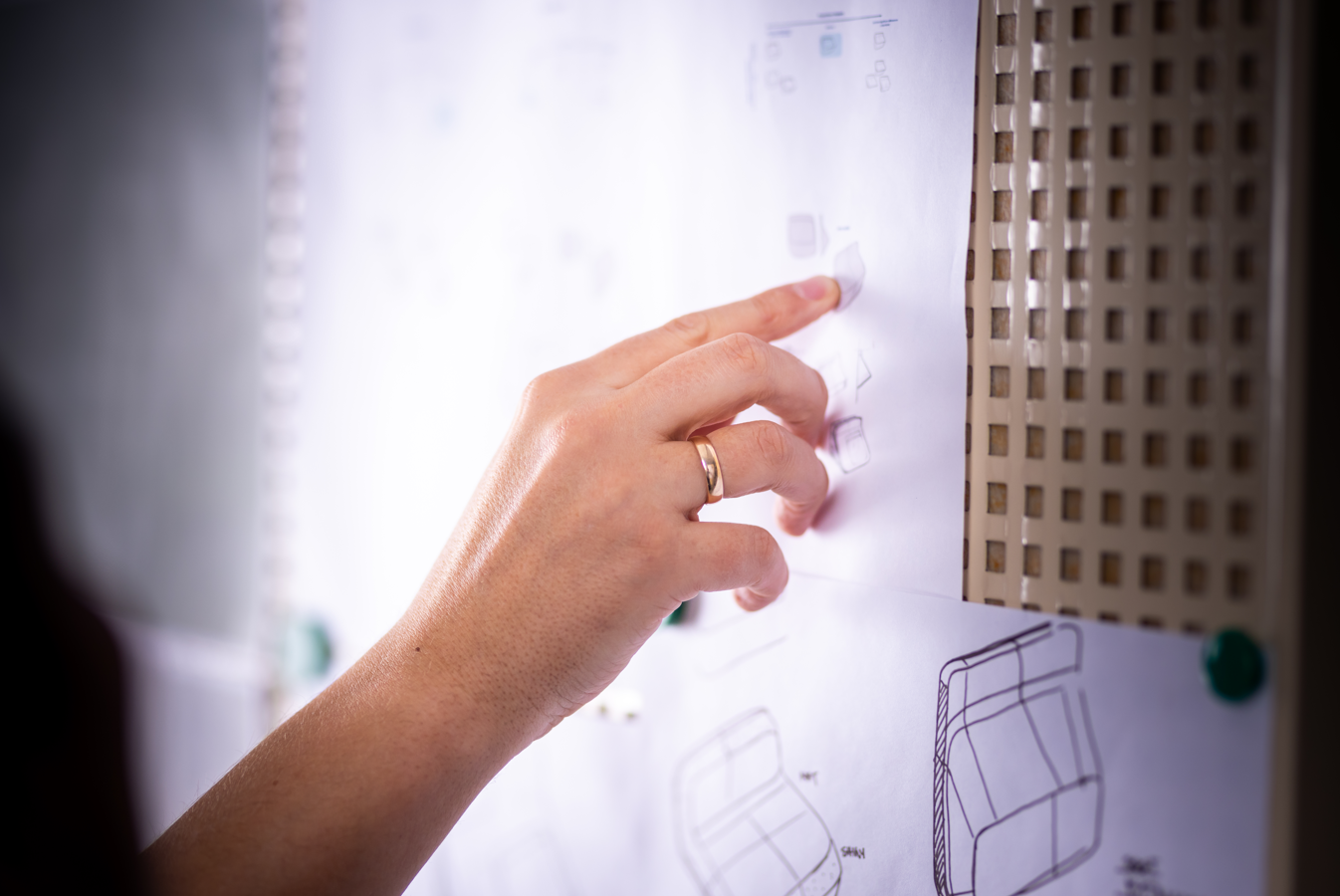
Design products for longer lifetimes and improved serviceability.
Operations
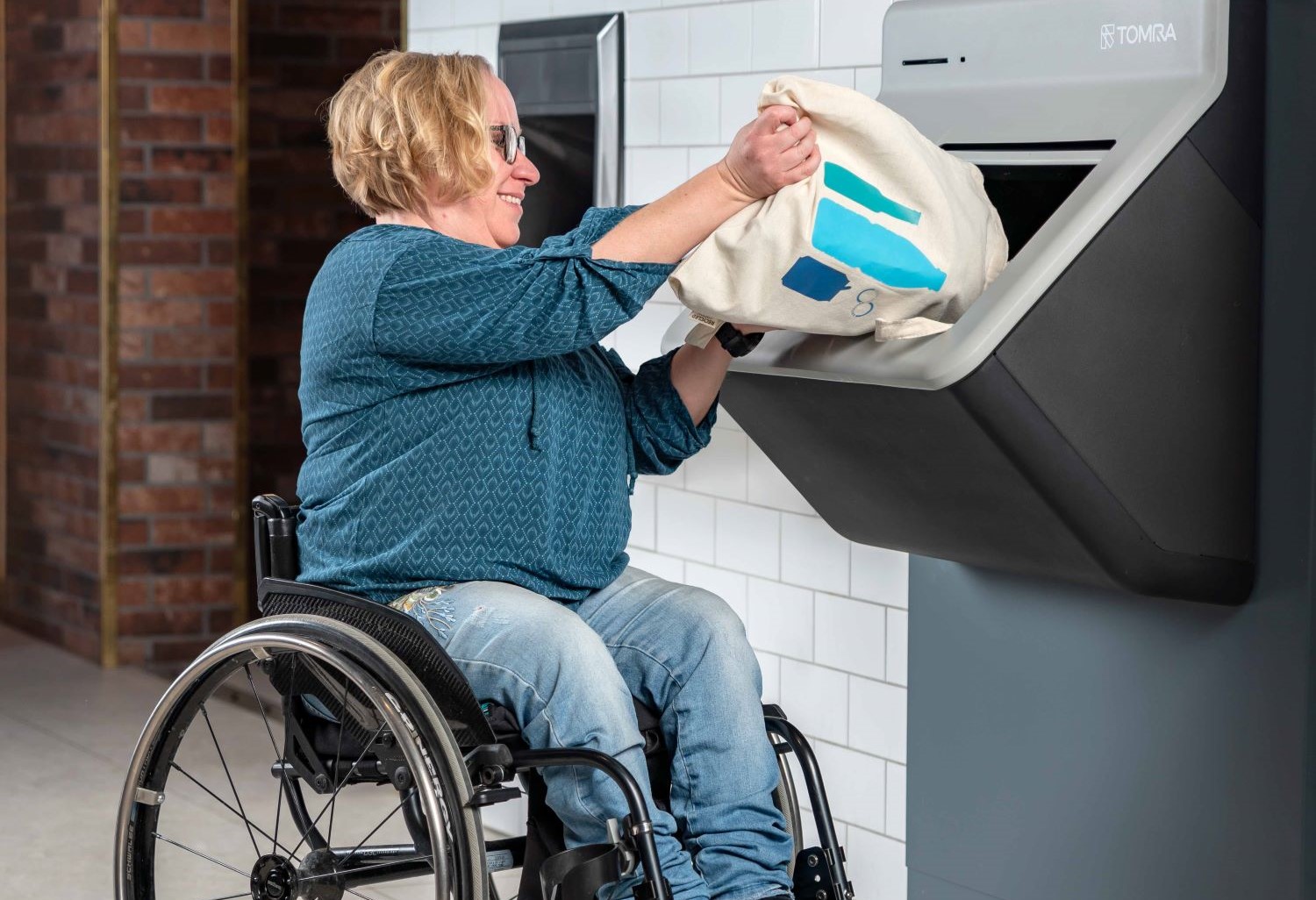
Deliver more efficient and proactive service.
End of life
Build refurbishment and repair loops, including the remanufacturing and resale of machines.
TOMRA Retility targets
Circular technology
Repurposing existing parts and components from retired products, and ensuring that nothing goes to waste.
Sustainable materials
For example, using recycled and recyclable materials in the production of products and replacement parts.
Enhanced product utility
Through refurbishment, repair, remanufacture, and smart innovation, we improve the durability and lifespan of our products.
Taking responsibility for retired TOMRA products and waste parts created during service
Despite the huge positive impact that TOMRA reverse vending machines enable, when those machines reach their end of life, it’s our responsibility to ensure that their disposal leads to as little negative impact as possible.
SUSTAINABLE PRODUCT DESIGN
Recycling waste polymers
When we throw things away, we want them to come right back so that they can be used again, just like a boomerang. In line with this thinking, Project Boomerang is the start of an exciting journey to increase the share of recycled content in TOMRA reverse vending machines (RVMs) and enable material flows to enter circular loops.
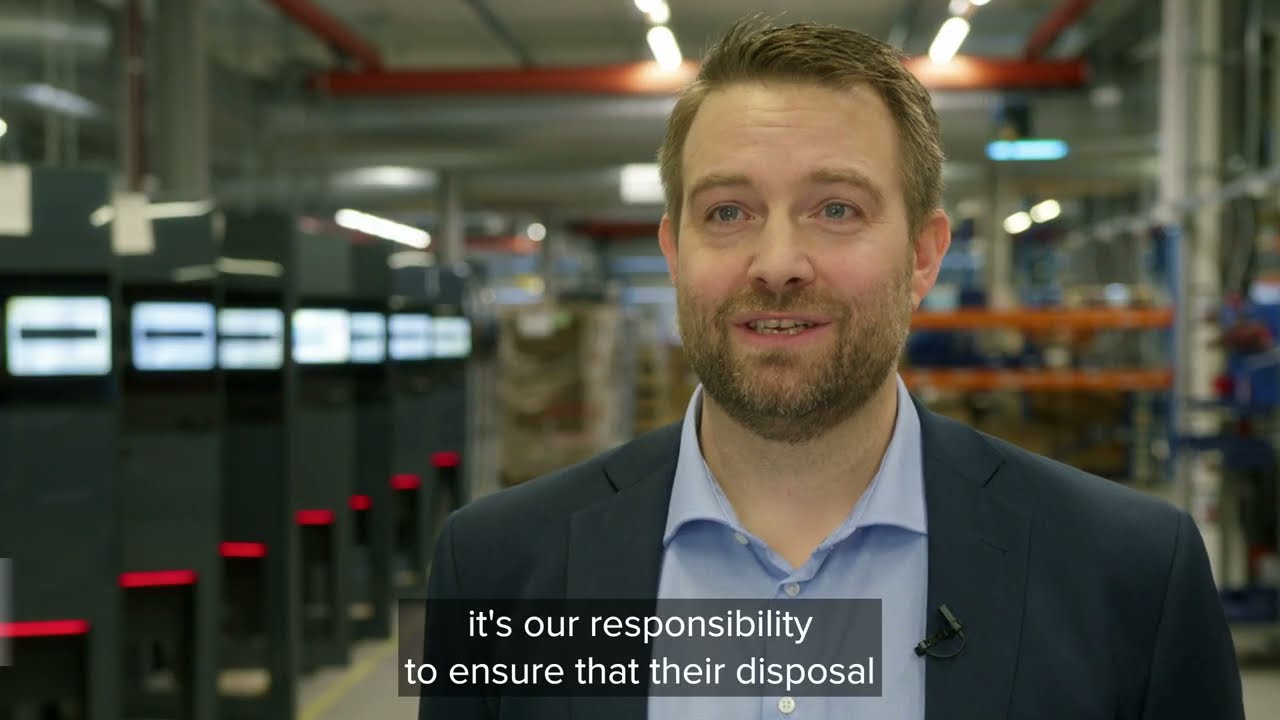
One way for us to reduce our footprint is to make our products more recyclable when they are retired and to use more recycled material in our products.
Marius FraurudHead of TOMRA Collection

A second life
Certified pre-owned TOMRA technology
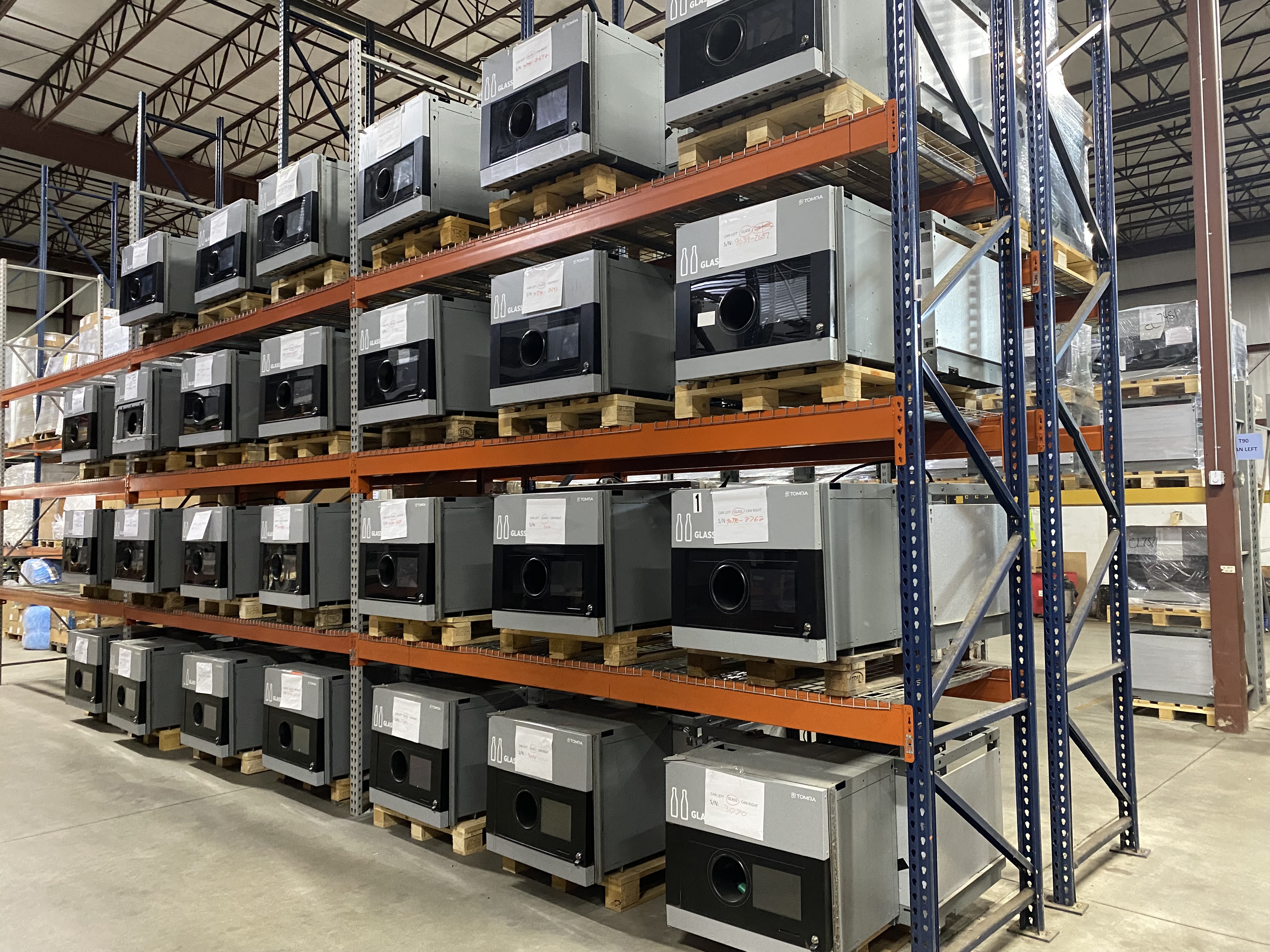
Sometimes, the most sustainable reverse vending machine is the one that already exists. We've offered refurbished machines to customers in some markets since the early 2000s. Would you be interested in this offering?
Transforming our organization to minimize our environmental footprint
Integrating sustainable product design
Reducing the emissions from our operations
Driving change across our organization
Let's collaborate!