Rich Text Block Chapter 1: Born from Oil
It begins with crude oil. PET (polyethylene terephthalate) is a thermoplastic polymer derived from petroleum. The manufacturing process is energy-intensive: producing one kilogram of virgin PET requires approximately 77 megajoules of energy. A standard 500ml PET water bottle weighs around 18 grams. The energy embedded in it before the consumer even picks it up is measurable and significant — this is the energy that is lost when a bottle ends up in general waste instead of being recycled.
Rich Text Block Chapter 2: Filled and Sold
The bottle travels from the packaging plant to a beverage filling facility. It is washed, filled, capped, labelled and packed into cases for distribution. A barcode is applied — the same barcode that, in a deposit return system, will later identify the container and trigger a refund.
The bottle reaches a retailer’s shelf. A consumer purchases it. In a country with a deposit return scheme, they have paid a small deposit — typically 10 to 25 cents — on top of the purchase price. That deposit is the key to what comes next.
Rich Text Block Chapter 3: Consumed and Returned
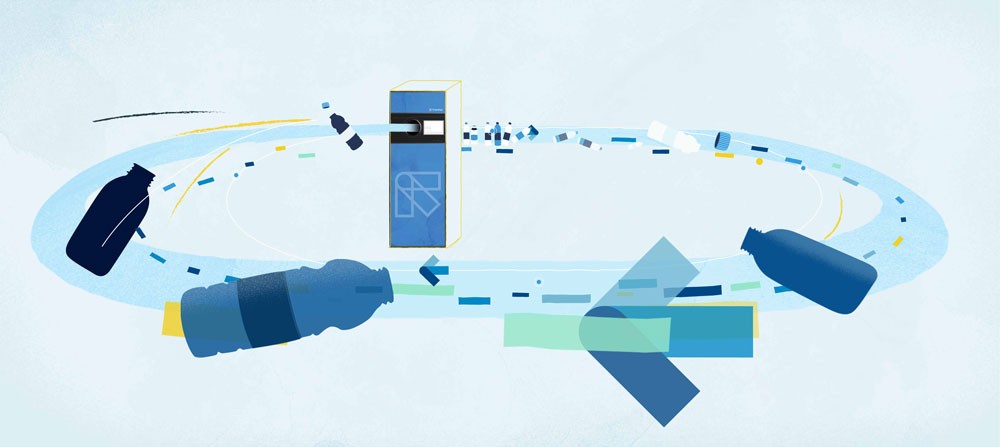
The bottle is opened. The beverage is consumed. The consumer inserts the empty bottle into a TOMRA reverse vending machine. In under four seconds, the machine reads the barcode, verifies the container against the national DRS product register, compacts and stores the bottle, and issues a refund — as a voucher, digital credit or cash.

Rich Text Block Chapter 4: Sorted and Recovered
The compacted material is collected by a logistics operator and transported to a material recovery facility. Here, bales of PET are processed — shredded, washed and extruded into high-quality recycled PET flake or pellet (rPET).
Because the material was collected through a DRS — rather than mixed household recycling — it is exceptionally clean and consistent. This rPET commands a premium price in the market and can be used in food-grade applications: new bottles, food packaging, fibres. The carbon footprint of recycled PET is approximately 70% lower than that of virgin PET.
Rich Text Block Chapter 5: Born Again
The rPET pellet becomes a new bottle. That bottle is filled. Sold. Consumed. Returned. The circle closes. In the best-performing DRS markets — like Norway, where TOMRA operates the national deposit return system — a PET bottle can complete this cycle multiple times before the polymer degrades.
This is not a utopian vision. It is the operational reality in Norway, Sweden, Germany, Finland, Estonia and a growing number of markets worldwide. The technology exists. The systems work. The question is how quickly the rest of the world will follow.
CTA Block Make the Circular Economy Real in Your Market